RIEDEL Wine Glass Experience with Maximilian J. Riedel
February 11, 2026
A Taste of Italy at SOBEWFF®: An Immersive Tasting with the Pasta Queen and Chef Scott Conant
February 19, 2026In Miami, we tend to think of wine as part of the setting the ocean view, the perfectly set table, the golden light at sunset. But at the recent Riedel Wine Glass Experience, held here in the city, I was reminded that sometimes the most important detail isn’t the wine itself. It’s the glass in your hand.

The evening wasn’t a traditional tasting. It was a quiet masterclass in perception one that revealed how the shape of a glass can dramatically alter how a wine smells, feels, and ultimately, how it lives in your memory.
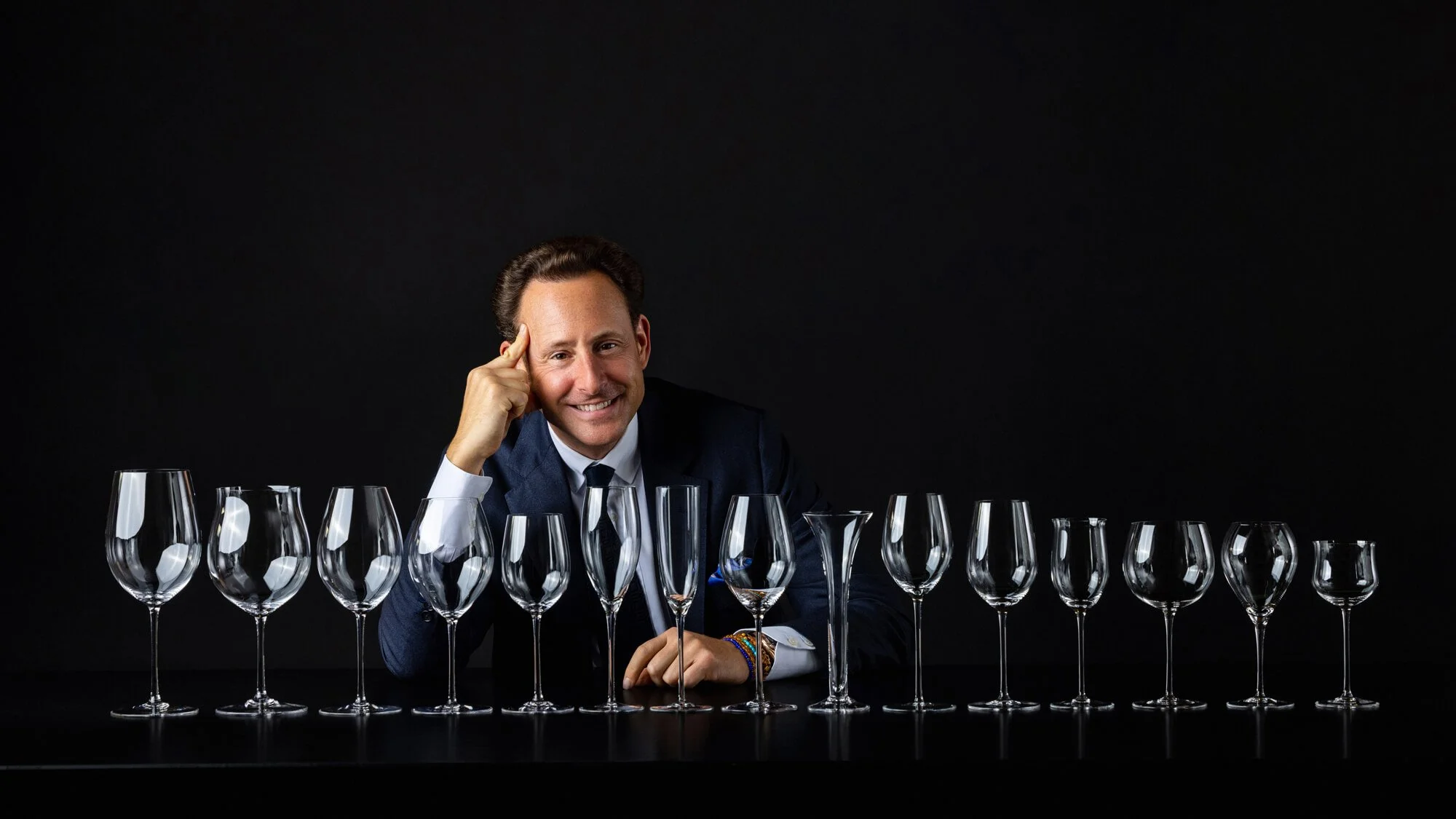
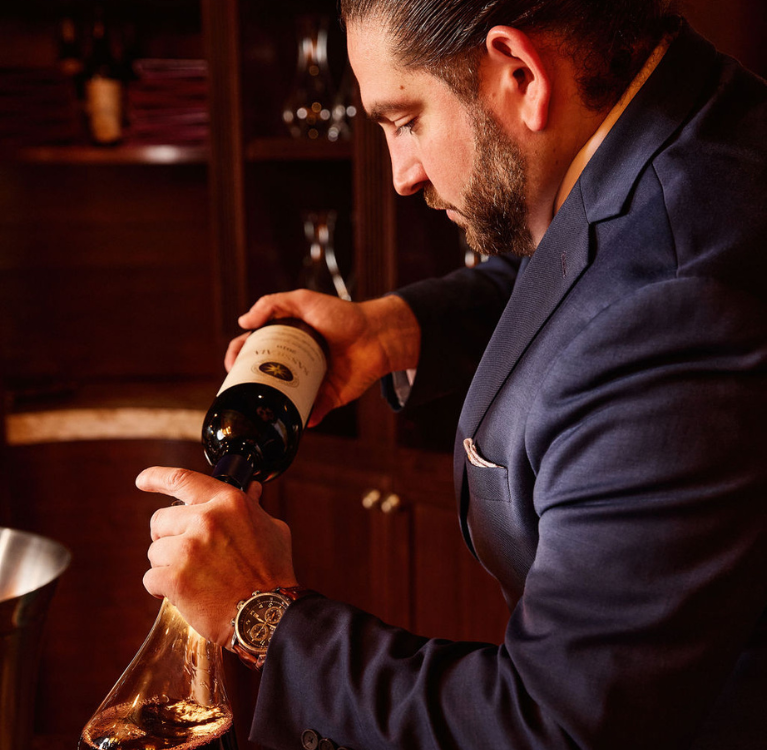
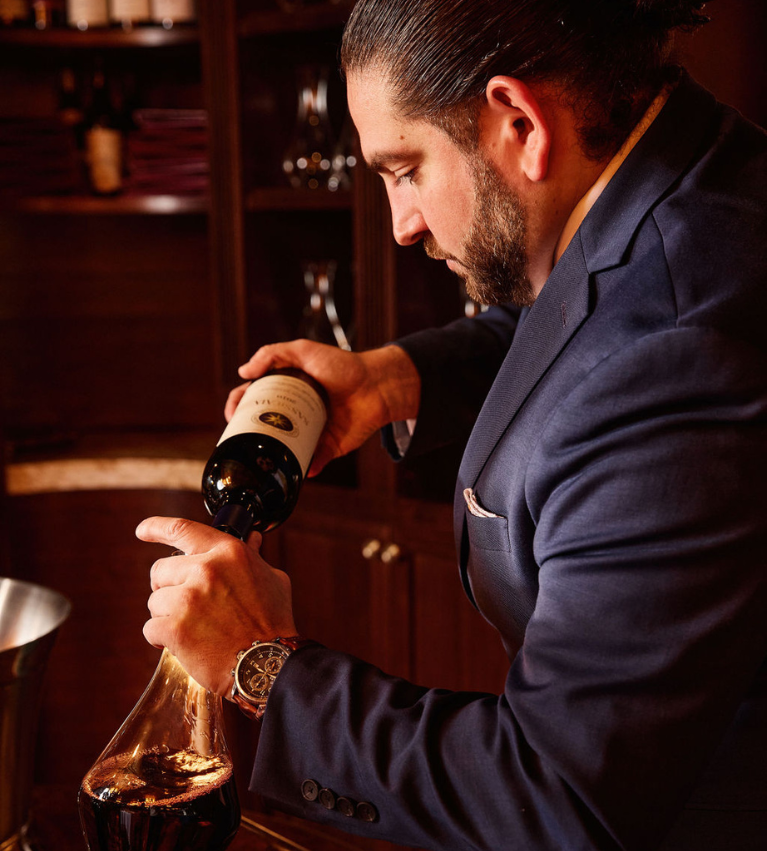
Leading us through this revelation was Maximilian Riedel, the 11th generation CEO of the Austrian glassmaking dynasty that has spent centuries redefining how the world experiences wine. Maximilian has built a career and a global following around a deceptively simple premise: that a wine glass is not a passive vessel, but an active instrument. That its shape can fundamentally alter aroma, balance, texture, and emotion.

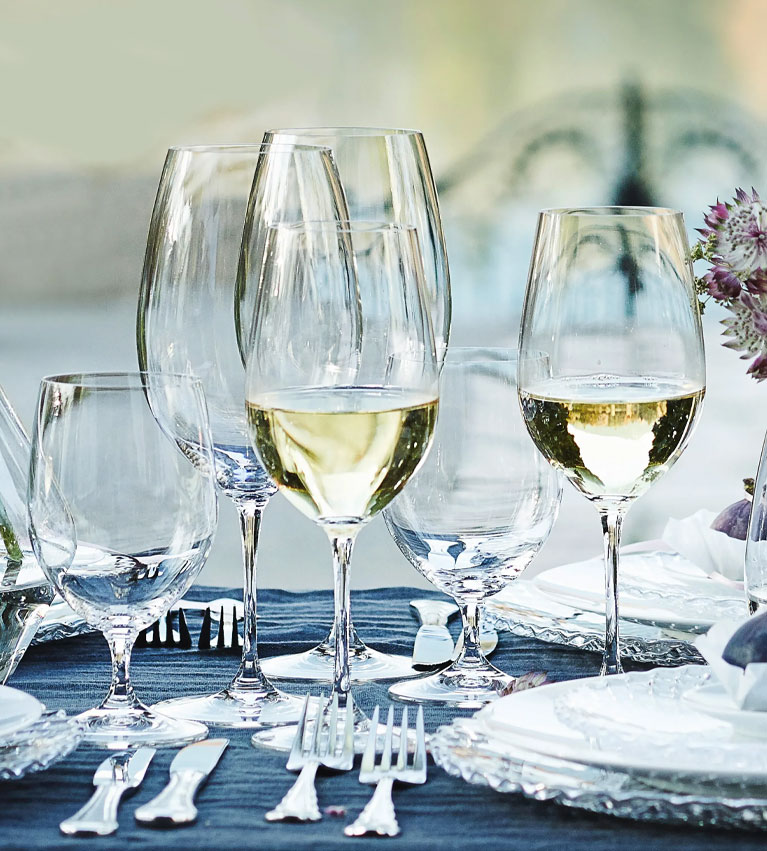
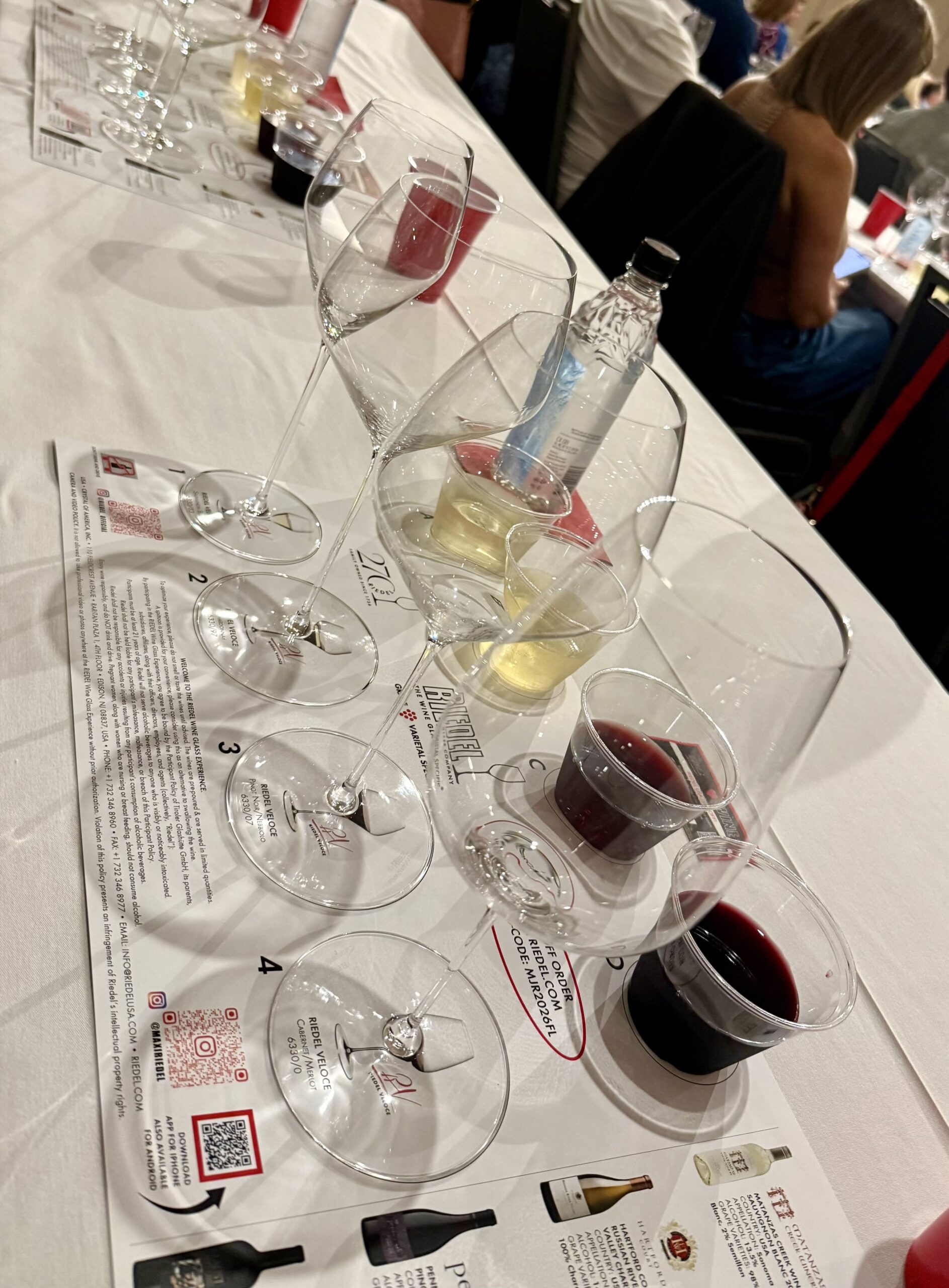
At first glance, the glasses arranged before us looked like subtle variations on a theme. Slightly taller stems. Slightly wider bowls. Barely perceptible differences in curvature. Elegant, yes but unremarkable to the untrained eye.
But as Maximilian began to speak, those differences revealed themselves not as aesthetic flourishes, but as precision tools engineered to shape perception itself.
Before us sat four wines: the Matanzas Creek Sauvignon Blanc 2024 from Sonoma Coast, the Hartford Court Russian River Valley Chardonnay 2024, the Penner-Ash Pinot Noir 2022, and the Faust Cabernet Sauvignon 2022 from Napa Valley. Each would be poured into every glass not to compare wines, but to compare realities.
The Veloce Series: Precision in Crystal

The first experiment was the Sauvignon Blanc.
In a generic glass, it was pleasant but muted. Crisp, but restrained. Then we poured it into its designated Sauvignon Blanc glass, and something remarkable happened. The wine seemed to awaken. Aromatics surged forward, bright citrus, fresh herbs, the faint salinity of coastal air. The acidity felt more precise. The finish lingered longer.
The wine had not changed. Only the glass had.
Around the room, people leaned forward, surprised, almost suspicious of their own senses. Maximilian watched calmly. He had seen this moment countless times.
The Chardonnay revealed the same quiet transformation. In the wrong glass, it felt narrow, almost tense. But in the proper glass, it expanded, stone fruit, subtle oak, and a roundness that felt intentional, composed. It wasn’t just more flavorful. It was more complete.
By the time we reached the Penner-Ash Pinot Noir, the lesson had become undeniable. Pinot Noir is fragile, emotional, easily misunderstood. In the wrong glass, it felt disjointed. In the proper one, it became seamless—silky, aromatic, alive.
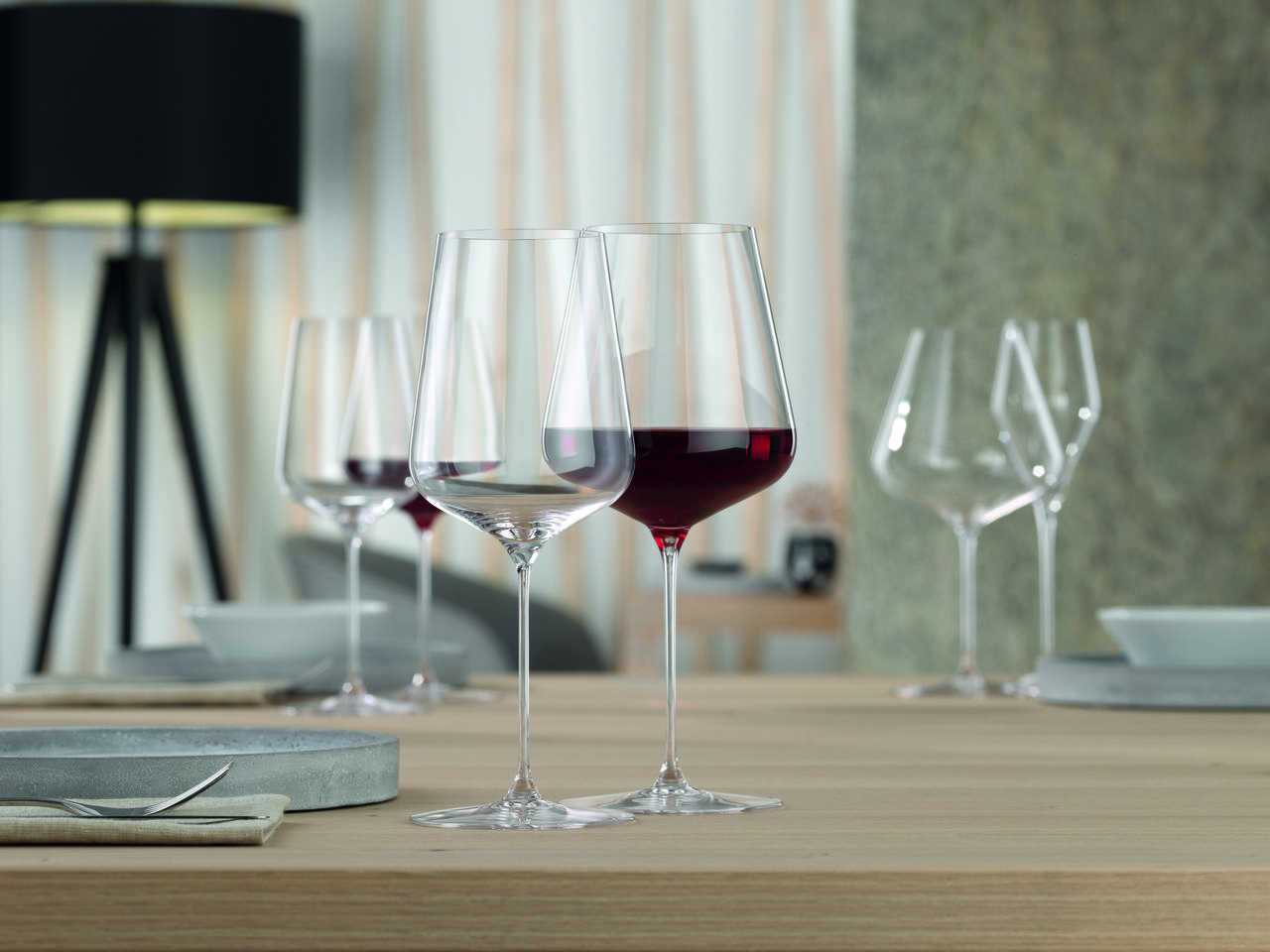
Then came the Faust Cabernet Sauvignon, perhaps the most dramatic shift of the evening. In a narrower glass, the tannins felt sharp, almost confrontational. But in the Cabernet glass, the structure softened. The fruit deepened. The wine felt balanced, architectural, powerful, but graceful.
Maximilian explained that this was not illusion, but design. The bowl controls oxidation. The rim directs where the wine lands on the palate. The shape determines how aromas concentrate and release. Each curve exists for a reason.
This philosophy traces back generations. The Riedel family has been crafting glassware since 1756, but it was Maximilian’s grandfather, Claus Riedel, who first proposed the radical idea that form should follow function—that each grape varietal deserved its own glass. Maximilian has since carried that idea to the world stage, transforming what was once considered obsessive detail into accepted truth.
Watching him guide the room, you realized he wasn’t just presenting glassware. He was reshaping perception itself.
In Miami, a city obsessed with atmosphere, with sensory experience, with the emotional texture of place the lesson felt especially resonant.
We often believe the magic of wine lies in the vineyard. Or the vintage. Or the moment in which it’s consumed.
But that evening revealed something deeper. That experience itself can be engineered. That the difference between a good glass of wine and an unforgettable one may come down to something as quiet and overlooked as curvature and balance.
By the end of the night, the glasses in front of us no longer looked interchangeable. They looked intentional. Alive with purpose.
You realize, in moments like this, that mastery often lives in the details we overlook.
And once you’ve experienced wine this way, you don’t just drink it.
You listen to it differently.
Estimated reading time: 1 minute